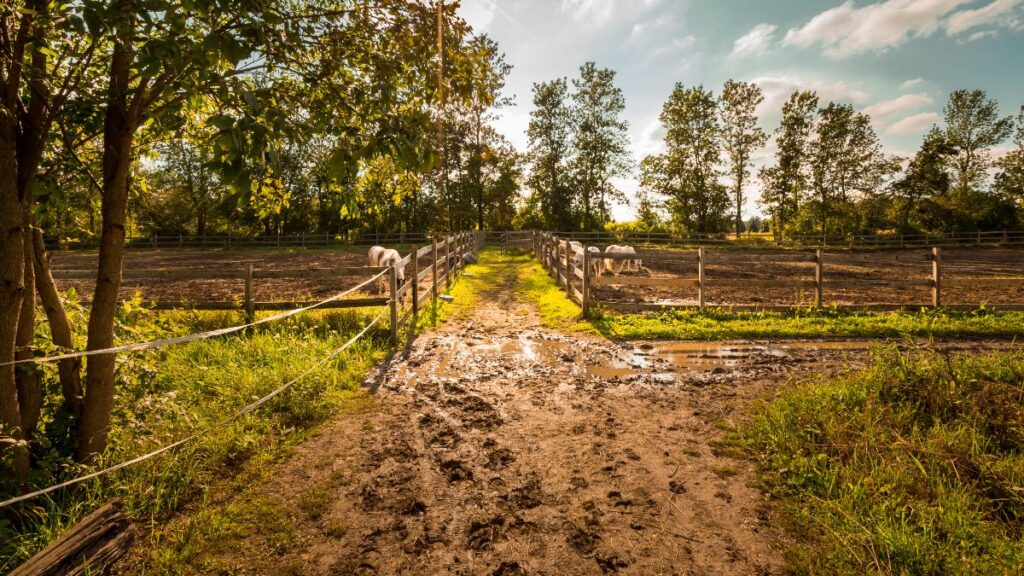
Having a property surrounded by other properties and without direct access to a public road may force pass through a neighbor’s land to be able to enter or exit it. This is what is known as an easement of way, but the fact that this right exists does not mean that the owner of the isolated property can freely decide where to open the path.
The Civil Code establishes in its article 564 (which can be consult in this BOE) that the owner of a property located among other properties and with no access to a public road has the right to demand a passage through neighboring properties, although as a general rule he will have to compensate the affected owner.
Furthermore, there are differences between a permanent easement, which can be used continuously for all the needs of the farm, and those situations in which it is only necessary to temporarily cross another property to cultivate the farm or remove its crops. This difference also influences the compensation that the owner of the affected property must receive.
Now, once this right is recognized, the question arises as to which part of the neighbor’s property exactly that path has to pass through?
The owner of the located property cannot freely choose the route
The answer is in article 565 of the Civil Code, which establishes that the path must be through the place that least affects the property of the other owner and that, as long as it is compatible with this criterion, it must be done along the route that has the shortest distance to the public road.
That is, among several alternatives that cause similar damage, the one that allows reaching the public road by traveling a shorter distance should be chosen, as far as possible.
For example, if the most direct path requires crossing a built-up area, a crop or a particularly harmful part of the property, while there is another alternative that allows access to the public road causing less damage, it will be this damage that must be taken into account when determining the route.
The width of the passage also depends on the needs of the farm
Although the Civil Code does not establish a single width for easements, in its article 566 it states that the width of the passage will be that which is sufficient to meet the needs of the located property.
Asturias work calendar 2027: all long weekends and holidays
They install 28 solar panels on the roof to save energy and the City Council forces them to remove them because they damage the aesthetics of the building
This means that it will not necessarily have to be the same width if access only needs to be done on foot as if it is necessary to allow the regular entry of vehicles, agricultural machinery or other means necessary to use the property.