

Add NewsWork in 
The energy crisis derived from international instability has made home efficiency a priority for economic survival. Under this scenario, techniques that were previously considered “homemade patches” have received the endorsement of science.
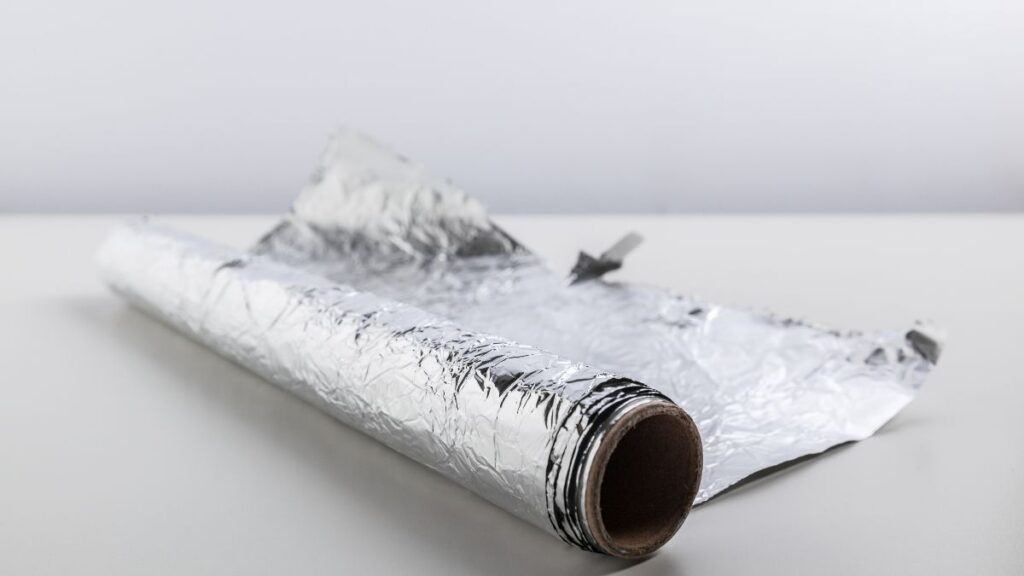
The use of technical aluminum sheets has established itself as the low-cost renovation with the fastest return on investment, less than two winters, thanks to its ability to manage thermal radiation and protect the structure of the home.

A woman spends more than 440,000 euros to build an independent house in her garden to take care of her 78-year-old mother after becoming a widow: “I didn’t want to send her to a nursing home”

Valerio Perna, specialist at the University of Navarra Clinic: “When the cigarette disappears, all thoracic surgeons will retire”
What scientists say
The scientific basis, supported by studies from ASHRAE and the Eduardo Torroja Institute, lies in the low emittance (total amount of radiant energy emitted by a surface per unit area and time) of aluminum.
While a conventional brick wall absorbs heat and radiates it outside in winter, aluminum acts as a thermal mirror that bounces up to 97% of the infrared radiation back into the room.
“It prevents the heat from the radiator from heating the wall and ‘bounces’ it towards the center of the room,” confirm the IDAE experts, pointing out savings of between 10% and 20% just by placing sheets behind the radiators.
The diagnosis of aluminum foil
For those homeowners who suspect structural problems, there is a simple but effective diagnostic test. According to building experts, placing an aluminum sheet on the wall allows you to identify whether the humidity is internal or environmental.
“The walls of your house can absorb up to 1 liter of water per square meter per day due to condensation alone. If when placing aluminum foil condensation forms behind it, it is a clear sign that the wall is damp inside,” warn specialists.
This phenomenon, known as interstitial condensation, is responsible for the appearance of mold and mildew. To combat it, modern architecture prescribes the use of vapor barriers (polyethylene films or technical aluminum) that prevent the steam generated by daily activity, showering or cooking, from reaching the cold layers of the wall and transforming into liquid.
“A house without insulation is a refrigerator in winter and hell in summer”
Architect Marcelo Seia, a specialist in thermal rehabilitation, emphasizes that the secret to good insulation is not only the material, but the air that it traps. “What we call thermal insulation are materials to slow the passage of heat. If the walls or ceilings are thin, the house will not be comfortable,” explains Seia.
The architect highlights several solutions depending on the budget:
- SATE (Exterior Thermal Insulation System): Cover the façade with extruded polystyrene. According to Seia, “with just 5 centimeters of this coating, greater insulation is achieved than a 30 centimeter wall.”
- Interior coating: Ideal for apartments in neighboring communities, using metal structures and plasterboard.
- ‘Zero cost’ solutions: Paint ceilings and facades white to reflect solar radiation, check window weatherstripping or install natural sunshades such as trees.
The golden rule: the air chamber
Both the studies from the Polytechnic University of Madrid and the 2026 technical manuals emphasize a critical point: for aluminum to work as an insulator, it must have an air chamber of at least 2 centimeters in front. If it is glued directly between two solid materials, the heat will pass through conduction and it will lose its properties. “The scientific secret is not just the metal, but the air space that accompanies it,” the technical reports conclude.
Insulating the home not only improves thermal comfort, but also reduces outside noise and increases the value of the property, allowing savings of up to 50% on utility bills.