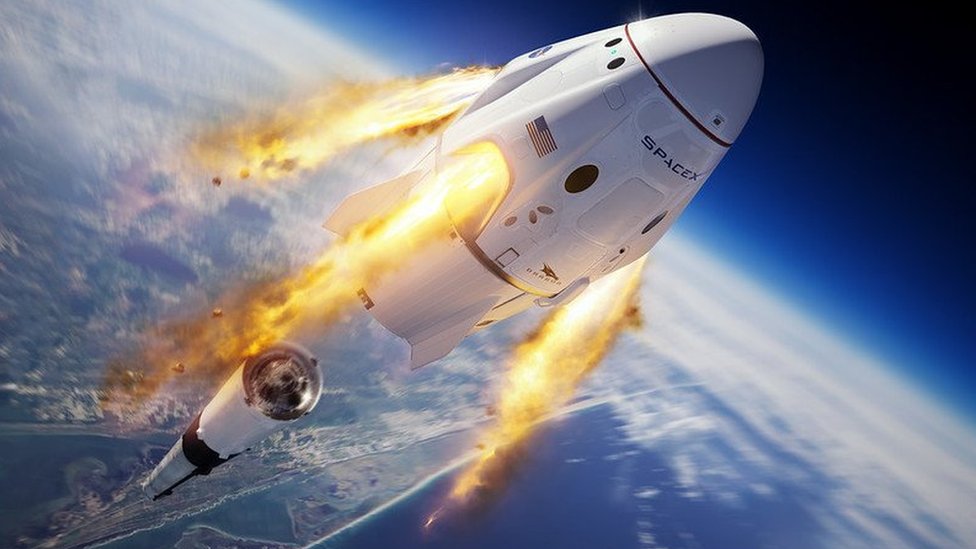
Ramon Alfonso, partner at NORZ Patrimonia EAF, analyzes one of the most anticipated operations on the market: the possible IPO of SpaceX, Elon Musk’s aerospace company valued at up to 2 billion dollars.
What is SpaceX and why its IPO matters
SpaceX—Space Exploration Technologies Corp.—is the aerospace company founded by Elon Musk, also known as Tesla. Born with the declared objective of making access to space cheaper and, in the long term, making the colonization of Mars possible, the company has become the most relevant private player in the sector in the last two decades.
Its business combines several lines of activity: the launch of reusable rockets, the transportation of cargo and astronauts, the Starlink satellite internet service and the development of Starship, the giant vehicle with which Musk aspires to reach Mars. This diversity explains both its attractiveness and its complexity in the face of a stock market valuation.
Until now, SpaceX was not listed on the stock market: it was a private company, accessible only to institutional investors and high net worth investors through financing rounds. An eventual IPO (IPO) would change that scenario and open—at least in theory—the door to the individual investor. Hence the enormous interest that the operation is arousing.
A recent turn in Elon Musk’s stance
For years, SpaceX’s IPO was a distant horizon. Musk himself repeated on numerous occasions that he did not want to list the company until the business—and especially the Mars project and the development of Starship—was much more mature and stabilized. That message, however, has changed in recent weeks.
“In May 2026, multiple information and regulatory documents have appeared that indicate that the IPO process is already underway,” explains Ramon Alfonso, partner at NORZ Patrimonia EAF. According to information published by Reuters and other financial media, SpaceX has filed documentation with the SEC, the US stock market supervisor.
A possible historic IPO in June 2026
The deadlines that are being handled point to an imminent calendar. According to Alfonso’s analysis, the roadshow of the operation – the phase in which the company presents the project to investors – could start in June 2026, with an indicative debut date on the Nasdaq around the 12th of that same month.
The magnitude of the operation is one of the most striking aspects. The estimated valuation could be between 1.5 and 2 trillion dollars, a figure that would make this placement one of the largest IPOs in history.
The NORZ Patrimonia partner introduces, however, a note of caution: the deadlines are not yet confirmed and, therefore, both the dates and terms of the operation could be modified before the debut.
How can a private investor enter?
For those who want to participate, Alfonso distinguishes several paths, each with its own implications.
The most direct option is to go to the retail section of the IPO itself. To do this, the investor must register in the share purchase process before the trading start date. In practice, this requires locating a broker or a financial entity that is part of the placement syndicate – the group of entities in charge of distributing the shares – and that has access to the IPOs in the US market, and communicating to it in the previous days the willingness to participate.
Here, however, a first limitation appears. “SpaceX’s IPO seems like it may be very oversubscribed,” warns Alfonso. Experience in operations of this type shows that, when demand greatly exceeds supply, retail investors tend to receive very small or no allocations at all, as institutions and large clients tend to take priority.
The second way is to wait for the stock to be listed and buy it on the market. Also in this case, Alfonso recommends caution: expectations indicate that the placement may be overvalued, and the investor runs the risk of buying in the first days in the midst of euphoria, a phase that is often followed by a correction. His recommendation is clear: for those who want to buy on the Nasdaq, it is usually worth waiting a few days or weeks until the market stabilizes.
There is, finally, a third, more indirect formula: investing through vehicles or companies that already have exposure to SpaceX. This is the case of some technology and aerospace sector ETFs and funds, as well as listed companies that are among SpaceX’s shareholders, such as Alphabet.
The risks that should be kept in mind
Alfonso is direct in listing the main risks of investing in SpaceX. The first is the price: there is the possibility of buying at exorbitant valuations, with aggressive multiples. Added to this is the nature of the business itself, which integrates various lines of activity that require heavy investments, entail a high technological risk and are subject to demanding regulation, both in the aerospace and telecommunications fields.
Invest or stay out?
When asked what an individual should consider—and even if the most prudent thing is not to enter—Alfonso offers a balanced assessment. It recognizes that SpaceX is “an extraordinary company, technologically leading” and with clear competitive advantages. The main difficulties, he clarifies, come from the uncertainties typical of a still young sector and valuations based on high multiples.
His conclusion points to moderation rather than total rejection. For an investor who believes in the development of this technology, who accepts high volatility and who has a medium and long-term horizon, the recommendation is to maintain a small and controlled exposure within the portfolio.