


The Superior Court of Justice of Aragon has confirmed the right of a cashier to continue receiving her pension for total permanent disability, forcing the National Social Security Institute (INSS) to back down, which had withdrawn it in 2024 alleging a supposed clinical “improvement.” The court concludes that the employee’s health status has not experienced any positive evolution, since she continues to suffer from a severe and disabling condition due to peripheral psoriatic arthritis, an anxious-depressive syndrome and suffer between 15 and 19 chronic migraine attacks per month, which do not subside with treatments and prevent her from exercising her profession.
The affected person in question worked as a cashier-stocker. After starting a medical leave in September 2022, the INSS initially recognized his total permanent disability pension, due to a clinical condition that included erosive psoriatic arthritis, anxiety-depressive syndrome, chronic migraine and asthma.
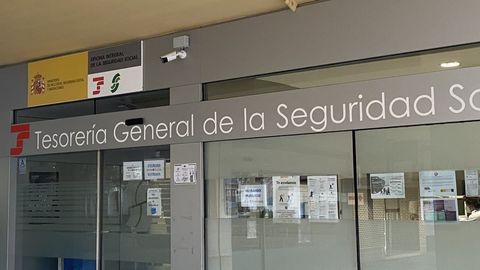
Social Security refuses to recognize permanent disability due to a work accident for employees who suffer injuries resulting from reckless negligence.

He claims 12,185.24 euros in arrears of 20% of his permanent disability pension, Social Security only pays him three months and the court denies it for requesting it late
In September 2023, they opened a review file and, in January 2024, they decided to withdraw his pension, alleging that he had experienced clinical improvement (stability without inflammatory activity) that allowed him to return to work.
The worker’s medical history
As stated in the ruling (STSJ AR 565/2026), the employee suffers from peripheral psoriatic arthritis. In fact, he had to suspend his biological treatment due to the persistence of inflammatory pain in his joints. He also suffers from a moderate reactive anxiety-depressive syndrome, manifested through apathy, a tendency to isolate himself, continued muscle tension and insomnia.
Added to this is a chronic migraine and possible trigeminal neuralgia. He suffers between 15 and 19 migraines a month, characterized by high-intensity throbbing pain, dizziness and cervical discomfort, without having experienced improvement despite undergoing specific treatments such as botulinum toxin and nerve blocks.
First judicial ‘battle’
Not satisfied with the Social Security resolution, the worker filed a claim through the courts, and her claim was upheld by the Social Court number 1 of Huesca. The INSS appealed this ruling and presented an appeal before the Superior Court of Justice of Aragon, asking to add that the worker’s migraines were fluctuating and that she tolerated certain medication well.
The court rejected this request, arguing that they had failed to demonstrate a clear and patent error by the initial judge in evaluating the evidence, but were simply trying to impose their own medical vision. Likewise, the INSS argued that the woman’s organic limitations did not prevent her from carrying out most of the tasks inherent to her job as a cashier-stocker.
The TSJ of Aragón confirms the total permanent disability
The Superior Court of Justice of Aragon recalled that total permanent disability corresponds to those who cannot perform the fundamental tasks of their profession with a minimum of safety and efficiency, or when doing so subjects the worker to a “continuous situation of suffering in their daily work due to pain.”
After analyzing the unchanged medical history, the court concluded forcefully that “the condition of the worker that justified the declaration of total permanent disability has not improved.” Therefore, her situation of inability to perform the functions of cashier-stocker persists.
Consequently, the TSJ dismissed the INSS appeal and confirmed the worker’s right to continue receiving her pension for permanent total disability. The sentence is not final and there is an appeal against it before the Supreme Court.