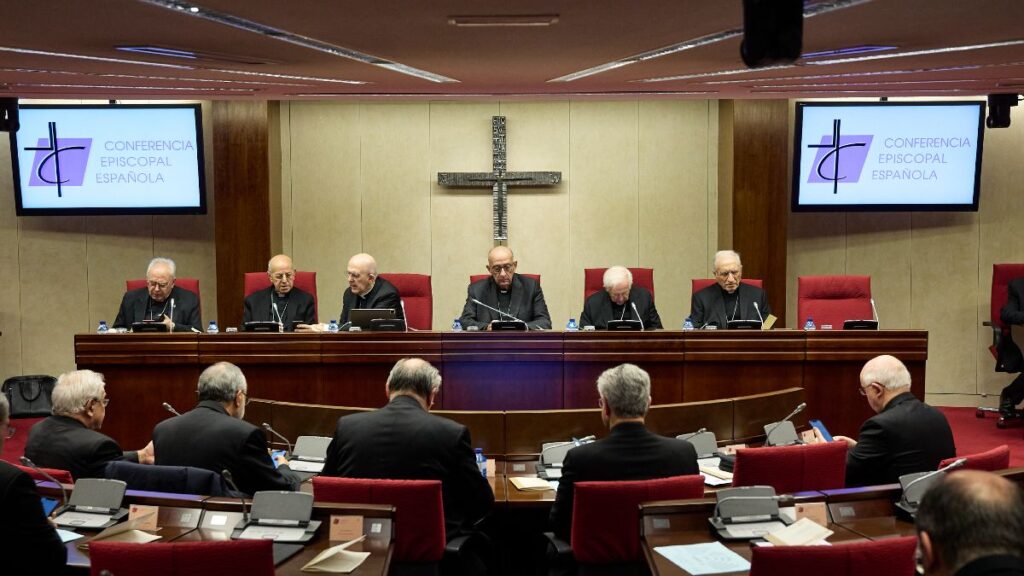


Definitive step to ensure tax exemption for compensation that the Church gives to victims of gender violence. The Official State Gazette (BOE) has published in its Resolution of May 20, 2026 the Validation Agreement of Royal Decree-Law 10/2026, of April 28. With this parliamentary step, the exemption in the Personal Income Tax (IRPF) for the amounts paid to victims of sexual abuse in the area of the Catholic Church, which was already included in the now ratified Royal Decree, is officially and irreversibly confirmed.
In practice, this implies absolute tax shielding for victims. The Treasury thus recognizes the need to provide special tax treatment to these amounts, guaranteeing that the money received as recognition and comprehensive reparation is not taxed in the income tax return. The measure provides a legal response to the General Action Protocol signed on March 30, 2026 between the Government and ecclesiastical institutions.

María Cristina Clemente, notary, warns: “as of June 1 you will pay less taxes” when buying a home, inheriting or making a donation in this community

The Treasury clarifies that buying the new house before selling the previous one does not prevent the application of the exemption for reinvestment in a habitual residence in personal income tax.
The BOE confirms the tax exemption
The key point of the reform is found in the first final provision of Royal Decree-Law 10/2026 (which can be consulted at the BOE of April 29). This section is the one that introduces the modification in Law 35/2006, of November 28, on the Personal Income Tax, specifically creating a new sixty-third additional provision.
The BOE collects it literally like this:
“The amounts paid by the Catholic Church to victims of sexual abuse suffered within ecclesiastical institutions will be exempt from this Tax in accordance with the system provided for in the Agreement of January 8, 2026… and in its Application Protocol of March 30, 2026…”.

Likewise, the rule adds a fundamental extension to ensure the principle of non-discrimination between those affected:
“Likewise, amounts paid by the Catholic Church to victims of sexual abuse in accordance with its own systems and reparation plans will be exempt from this Tax.”
When it comes into force and retroactive effects
The tax exemption was already technically operational since the original publication of the decree-law last Wednesday, April 29, 2026. However, the publication in today’s BOE of the resolution signed by the president of Congress, Francina Armengol, makes the full ratification of the Cortes Generales official.
Regarding its temporary application, the first final provision gives the measure a retrospective nature that is very favorable for taxpayers, since it expressly establishes that it will apply to previous non-prescribed years. This means that those victims who have received financial compensation in previous years and whose fiscal years have not yet expired before the Tax Agency, will also benefit from the exemption.
Why is this measure approved?
The explanatory memorandum of the legal text details that the origin of this measure lies in the agreement reached between the Ministry of the Presidency, Justice and Relations with the Courts, the Spanish Episcopal Conference and the Spanish Conference of Religious. The main objective is to achieve recognition and comprehensive reparation for all victims.
The urgency of the tax reform is justified by the imminence of reparations in accordance with the new Protocol, as well as by the existence of previous compensation within the framework of the Comprehensive Plan for Reparation for Victims of Abuse (PRIVA) of the Catholic Church. The legal text invokes the need to urgently adopt a measure in the fiscal field that avoids taxation of these amounts received or to be received. Furthermore, the Government argues that the application of the principle of non-discrimination with respect to victims requires extending the benefit to funds paid by ecclesiastical institutions in accordance with their own internal reparation plans.
How it affects the income tax return
This measure has a direct impact on the calculation of the personal income tax base for the affected people. In simple terms, compensation for personal injuries received for this concept will not count as income subject to tax.
The Treasury clarifies in the foundations of the rule that this change represents a “favorable sign for the affected taxpayers” and a reduction in their eventual obligation to contribute, so that there is no impact on the obligation derived from their economic capacity.
To correctly apply the exemption, beneficiaries must ensure that the financial amounts come from the procedures of the Protocol of March 30, 2026 or from the Catholic Church’s own reparation systems and plans, as strictly defined in the text of the new legal provision.