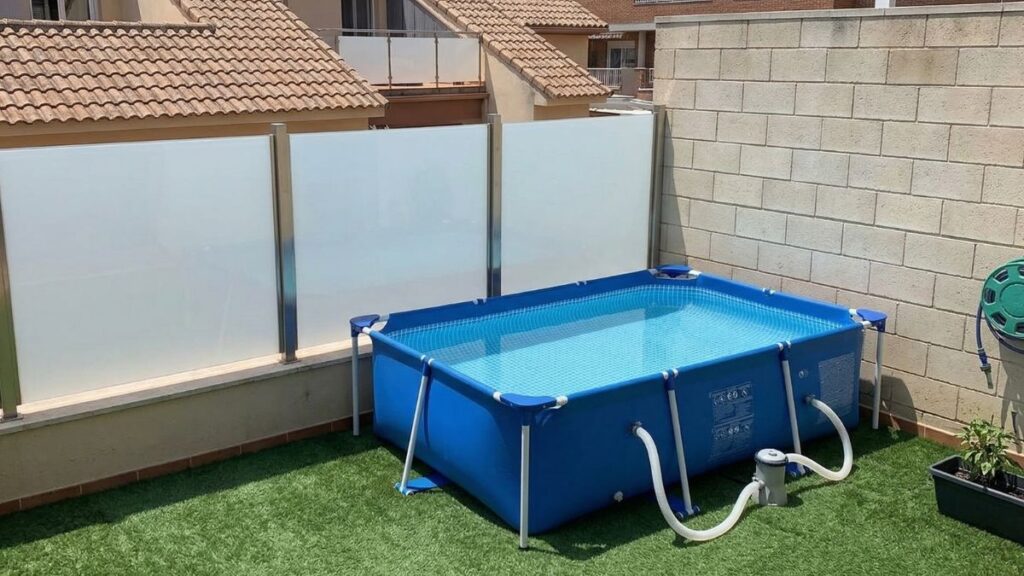


With the rise in temperatures, many begin to prepare the house for the arrival of summer with the iawning installation and even putting a small pool on the terrace. In this sense, we must bear in mind that the Horizontal Property Law establishes clear limits on the use of homes when they may affect the safety of the building or coexistence and that the community can force them to remove the pool if it poses a risk or generates problems.
Although the law does not expressly prohibit this type of installation, it does establish important restrictions. Specifically, article 7.1 establishes that no works or modifications can be carried out that alter the safety of the building, its structure, its exterior configuration or that harm other owners.
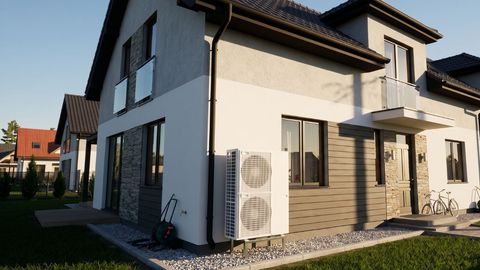
A neighbor installs an air conditioner despite the community’s rejection and the court agrees with him: he does not have to remove it because he did not puncture the façade or alter common elements in a relevant way.
Confirmed by the Horizontal Property Law: buying a home with community debts can force the new owner to pay them

This is especially relevant in the case of inflatable pools, since the weight of the water can be very high. A small pool can easily exceed hundreds or even thousands of kilos, which can compromise the resistance of the terrace. In these cases, the community may require its removal.
Experts warn of the risk of installing a pool on the terrace of a home
Although, as has been said, the Horizontal Property Law does not generally require requesting authorization to install an inflatable or removable pool, this does not mean that it can be done without control.
The General Council of Associations of Property Administrators (CGCAFE) clarified that, in principle, it is not necessary to have the approval of the Board of Owners to put a pool on the terrace, although it does recommend communicating this to the community in advance.
The key factor is structural safety. One cubic meter of water is equivalent to approximately 1,000 kilos, which can represent a significant overload for the terrace.
For this reason, the Higher Council of Colleges of Architects of Spain (CSCAE) warned of the risks of installing these pools without technical supervision. Its general secretary, Laureano Matas, pointed out that “without the necessary supervision of a competent professional (…) damage may occur to the structures of the buildings and, in the worst case, the safety of people may be threatened.”
Along the same lines, the General Council of Technical Architecture of Spain insisted that buildings are designed for specific uses and that it is essential to consult with a technician before installing a portable pool on a terrace or floor.
For all these reasons, before installing a pool on the terrace, it is advisable to review the community rules, inform beforehand and, above all, make sure that the structure can support the weight. In any case, it will be necessary to analyze each specific situation, since not all terraces or all buildings have the same capacity, and what may be viable in one case may not be viable in another.