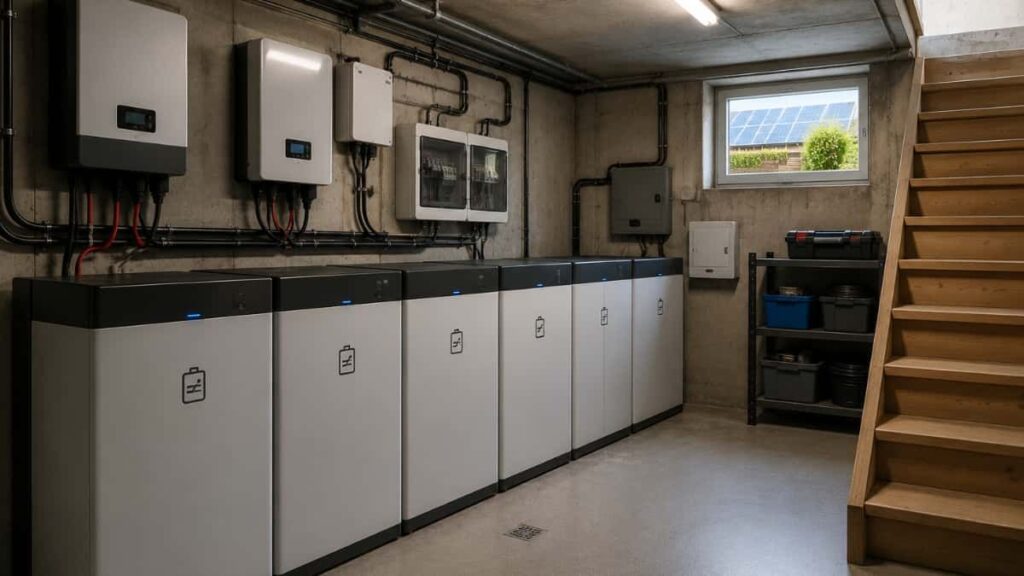


The Norwegian startup Photoncycle has closed a Series A financing round of 15 million euros to commercialize a home energy storage system that converts hydrogen into solid state and allows up to 10,000 kWh to be stored underground, a capacity equivalent to about 740 times that of a 13.5 kWh Tesla Powerwall home battery. The operation, led by the Japanese NordicNinja and the Finnish-Swedish Voima Ventures, opens the door to a seasonal storage model designed for European homes with intensive heating in winter.
Founder and CEO Bjørn Brandtzaeg places the goal in systemic terms. “Europe is beginning to solve short-term storage. The gap that remains is seasonal. If households can store summer energy for use in winter, they reduce their exposure to imported fuel and price volatility”explains the manager in the official Photoncycle statement. The company, founded in 2020 and incubated at MIT, plans the first commercial deliveries for the third quarter of 2027.

The EU tightens rules and will require proof of the origin of coffee and cocoa before being sold

The EU tightens the rules and will force all new cars to monitor the driver from July 2026
The system consists of two units. On the surface, a reversible fuel cell produces hydrogen from electricity and water, and performs the reverse process when the home needs to consume. Underground, a tank stores that hydrogen in a solid state using patented technology, allowing energy to be conserved for months. The patents consulted by specialized media specify that the storage medium is ammonia (NH3), with a synthesis reactor that captures nitrogen from the ambient air, although the corporate website does not mention that compound in its public communications, a point that the company will still have to clarify.
Round-trip electrical efficiency is lower than lithium batteries, but the system integrates heat recovery and is designed to operate alongside a heat pump, improving overall performance in heating-dominated climates. It is a key nuance: most of the energy demand of a Nordic home is allocated to heating the home, so the residual heat from the process is no longer a loss but forms part of the useful balance.
Access to the product will be offered under a subscription model that will include solar panels, a storage unit, maintenance and access to energy trading markets, in order to reduce the entry barrier for the owner. The maximum declared cost is around 350 euros per month, a figure that can be adjusted downwards depending on the surpluses discharged into the network. Simulations published by the company point to annual savings of between 30% and 50% on the usual bill, although that range has yet to be contrasted with real deployments.
The regulatory opportunity in the Netherlands and the industrial leap
The choice of the Netherlands is not coincidental. The country has one of the highest adoption rates of rooftop solar panels in Europe and is preparing to retire the residential net balance (salderingsregeling) in 2027, a regulatory change that will reduce the incentive to pour surpluses into the grid and reinforce the attractiveness of self-consumption with storage. The Dutch movement comes at a time when Spain consolidates its own regulation of residential photovoltaic self-consumption, included in Royal Decree 244/2019.
Photoncycle’s industrial roadmap involves reaching an annual production capacity of 1.4 TWh by 2027, enough, according to the company itself, to provide seasonal storage for 140,000 homes. If the plan is fulfilled, long-term domestic storage will cease to be a laboratory category and become a structural piece of the European residential electricity model.