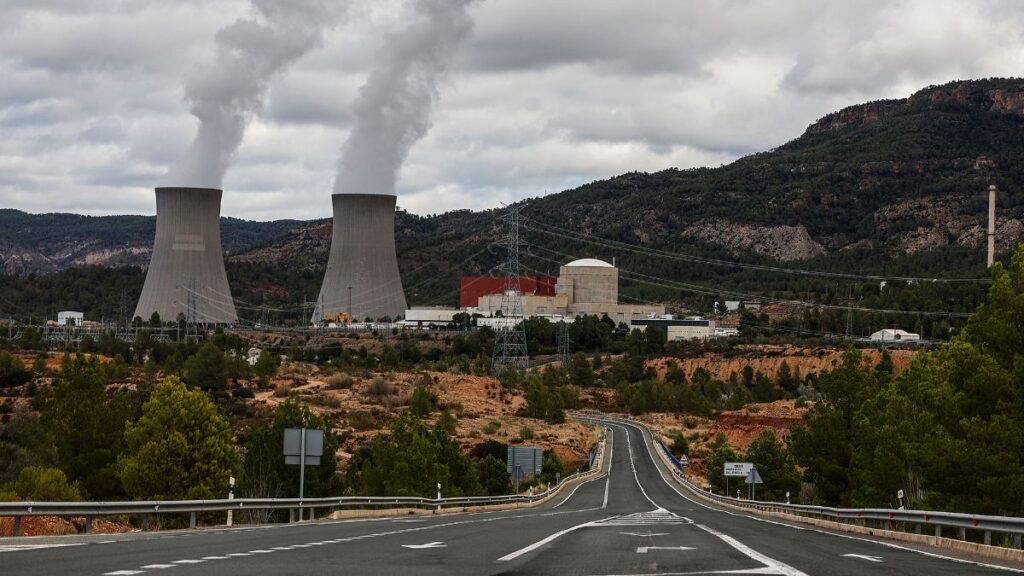


Nuclear energy is once again the subject of debate in Europe. After the energy crisis caused by the war in Ukraine, several countries are thinking about closing the nuclear power plants. However, Spain maintains the idea of progressively turning them off starting in 2027.
Alfredo García, disseminator of nuclear science and technology, has spoken about this matter in COPE’s ‘La Linterna’ program, where he warned about the price of electricity and what it could affect the pockets of Spaniards, ensuring that “it would rise approximately 23% or 24% for households and SMEs,” according to a Price Waterhouse study cited by the expert.

Justice forces Social Security to pay the widow’s pension to a woman who married in Mauritania: the marriage was not registered in Spain

The Government approves 315 million euros to subsidize agricultural insurance in 2026
The closure of nuclear plants raises the price of electricity
As he explained, many European countries have changed their minds in recent years because they have realized that renewable energiesalthough they are important, they are not always enough to cover all electrical demand. “Renewable energies are a great tool, but they are not enough,” he assured.
In this sense, Alfredo gave as an example the case of Belgium, where the Government is studying extending the life of its nuclear reactors, recalling that even the Belgian Prime Minister came to define decisions against nuclear energy as “the stupidity of the century.”
The reason, as he explained, is simple, because when nuclear plants are closed, many countries end up depending more on gas and coal to produce electricity. This causes both an increase in polluting emissions and an increase in the price of electricity.
Greater dependence on gas without nuclear energy
Currently, nuclear power plants generate around 20% of all electricity in Spain, representing only a small part of the country’s energy installations. However, they work practically all year round without interruptions, something that does not always happen with solar or wind energy, since they depend on the sun and the wind. For this reason, Alfredo believes that closing nuclear plants would force the use of much more natural gas. “That production would be replaced by 85% or 90% with natural gas,” he assured.
Thus, the first planned closure is that of the Almaraz I plant, in Cáceres, scheduled for November 2027. However, the expert maintains that there is still time to avoid it “if the Government changes its position.”
He has also denied that the electricity companies want to put an end to the nuclear plants, emphasizing that Endesa and Iberdrola “have said that they want to continue with the nuclear plants and have expressed it in every possible way.”
But the debate is not only economic. According to Alfredo, international organizations such as the International Energy Agency or the European Commission have also asked in recent years to reconsider the closure of nuclear power plants to avoid greater dependence on gas and reduce polluting emissions.
Meanwhile, Spain continues to defend its commitment to renewable energy and maintains the agreed closure schedule for nuclear power plants. An energy debate that, increasingly, directly affects citizens’ pockets.