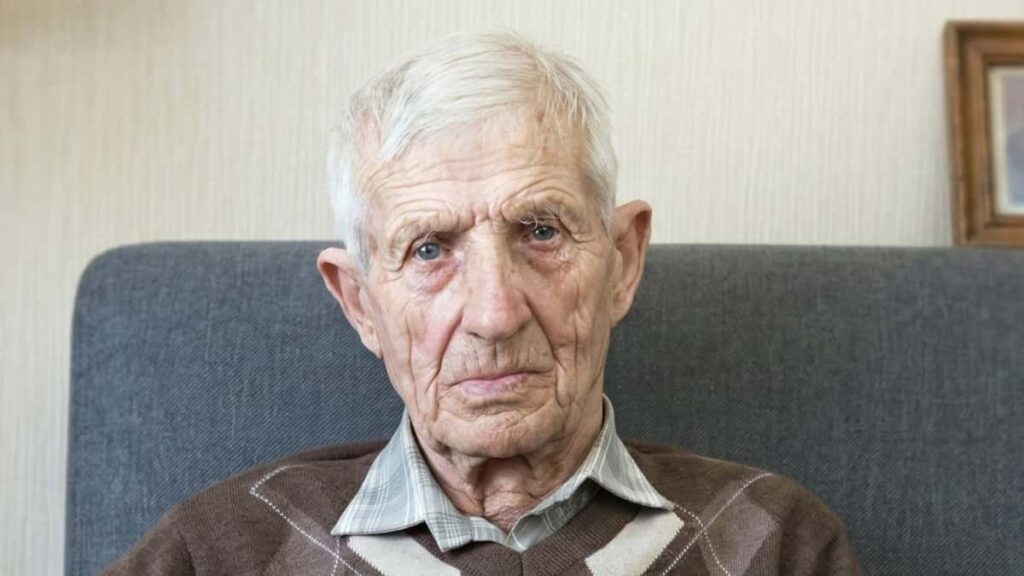
Frans Burchartz, an 84-year-old former nursing professor, decided to leave the labor market at 61 through an early retirement program in the Netherlands. More than two decades later, he claims to have no regrets. “I wouldn’t have wanted to work longer, it was the right thing to do,” he told the Dutch newspaper Algemeen Dagblad. Their experience reopens the debate on the sustainability of early retirement and the conditions necessary to maintain a stable standard of living after stopping working.
Burchartz receives two types of pension in his country, a basic public pension and a complementary one, which when added together leaves him with less than 3,000 euros net per month. A figure that may be high in comparison with Spainalthough it is not among the highest compared to other countries in northern Europe. Despite this, he assures that he has never felt like he lacks money.
Alfonso Muñoz, Social Security official: “From the age of 75 onwards is when it makes financial sense not to have requested our early retirement”

Ángel Martín (72 years old) retired: “I have contributed for more than 45 years and I have a penalty of 28.8% for life”
As he explains, the key is to spend wisely, he avoids unnecessary luxuries and prefers to allocate his money to what really adds value. “I prefer to spend on travel than on status symbols,” he summarizes.
A way to live retirement while controlling expenses well
Burchartz’s case shows a way of maintaining oneself that is increasingly common among European retirees, which is to maintain economic stability thanks to moderate spending. The retiree lives in a self-owned apartment acquired in 2018 and adapted to facilitate mobility, and maintains an autonomous life, with low expenses and an active social network.
As stated to the aforementioned mediain his daily life he usually meets people his own age and makes several trips a year, especially to Indonesia, where he was born and lived until he was twelve years old. In addition, for years he participated as a volunteer on organized trips for people with rheumatism, an experience that, according to him, helped him stay active after he retired.
From a social and population point of view, this type of case is related to the aging of Europe and the need to give a new role to older people. Retirement is increasingly seen as an active stage, not just a retirement, especially among those who are in good health and have a stable financial situation.
Retiring early is a penalty, but there are ways to compensate for it
However, retiring early comes at a cost. In most European countries, earlier withdrawal means collecting less pension. For example, in Germany a reduction of 0.3% is applied for each month that retirement is brought forward compared to the legal age.
To reduce this cut, German Social Security allows extra contributions from age 50 onwards. These can be paid all at once or little by little, but they are not returned if retirement is not brought forward in the end. For this reason, the organization recommends planning them well and having tax advice.
All this reflects the balance that pension systems seek. On the one hand, they need to be sustainable in the long term and on the other, there is a growing demand to be able to choose when to retire. Cases like Burchartz’s are possible, but they depend on factors such as having had a stable job, having complementary pensions and having planned your finances well.
Spain faces population aging and retirement flexibility
In Spain, the system also provides for early retirement, although with strict conditions and similar penalties. To access 100% of the pension, a minimum contribution periodwhich in 2026 will be around 36 and a half years old, and advancing retirement may mean a significant reduction in what is charged, especially if it has not been paid for many years.
Even so, as in other European countries, they have introduced mechanisms to encourage the extension of working life or to allow a more flexible exit from the labor market. The great challenge remains to find a balance between guaranteeing sustainable pensions and ensuring that they are enough to live on.