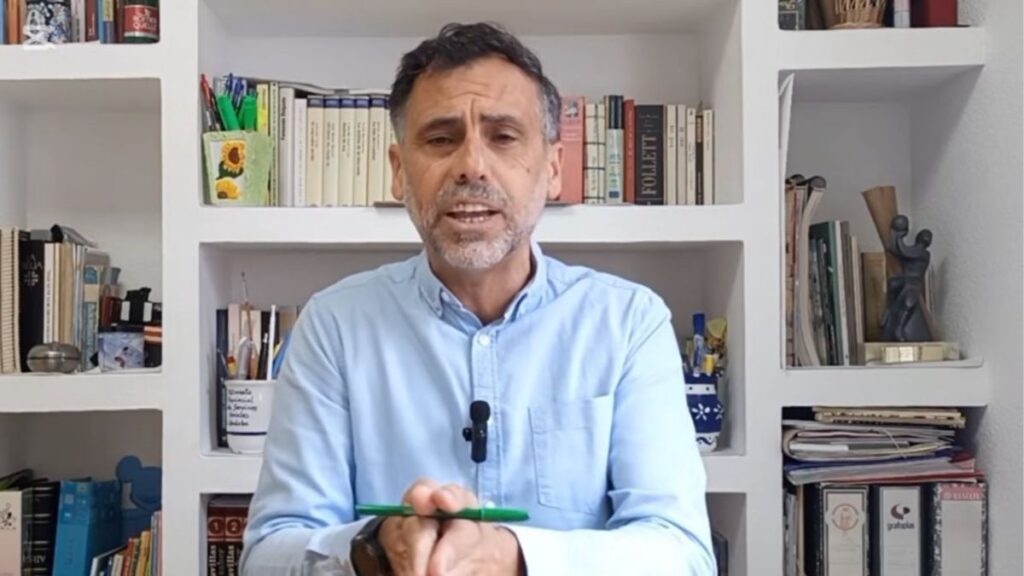
Alfonso Muñoz, expert and Social Security official, is very sincere when detailing that the economic profitability of waiting for the ordinary retirement age is only perceived, on average, when reaching 75 years of age.
In a context where 32% of new hires in 2026 are anticipated, Muñoz analyzes through financial simulations whether it is worth sacrificing a monthly amount for time off, concluding that, for those who have two years left in their working life, the advance is usually the most financially advantageous option in the short and medium term.
The ‘toll’ of early retirement
And in our country, early retirement has become established as an “expensive luxury” or a “precariousness trap.” Currently, 2.1 million people receive reduced pensions for having left the labor market early.
With current regulations, the penalties are monthly and can reduce the benefit by up to 21% for life if the advance is 24 months and you have few years of contributions.
Despite these cuts, the psychological and mental health factor prevails: many workers prefer to receive 200 or 300 euros less per month in exchange for gaining years of life. However, Muñoz warns that the decision must be based on real numbers and not just on sensations.
Official numbers
The expert focuses on a vulnerable group: recipients of the subsidy for those over 52 years of age. “The contribution during the subsidy is 125% of the minimum base (€1,726 in 2026), but the amount received is only €480 per month without extra payments,” explains Muñoz.
When comparing a worker who anticipates his retirement two years (receiving €1,300 with 14 payments) versus one who exhausts the subsidy to retire at the ordinary age (with €1,550), the difference is €24,800 in favor of the one who retires earlier during that two-year period. For the worker who waited to recover that money through his higher pension (€250 more per month), he would need to live 99 months (7 years) after retirement.
“The midpoint of compensation is around 9 years; that is, from the age of 75 onwards is when it is economically worthwhile not to have requested our early retirement,” says Muñoz.
Recommendations according to the time horizon
The official establishes three key scenarios for those who hesitate between the subsidy and the pension:
- With 2 years to go: “Normally it is interesting to request early retirement” due to the volume of accumulated income.
- With 1 year to go: The situation is complex and “requires making numbers for each specific case.”
- With 6 months remaining: “Normally it is interesting to continue collecting the subsidy” and wait until the ordinary age.
While the Government tries to encourage delayed retirement with checks of up to €12,000 or increases of 4% annually, social reality shows that the preference for young workforces continues to expel senior talent.
Involuntary early retirement has grown by 3% this year, making premature retirement the only way out for thousands of workers who see 75 years as a compensation horizon that is too far away.