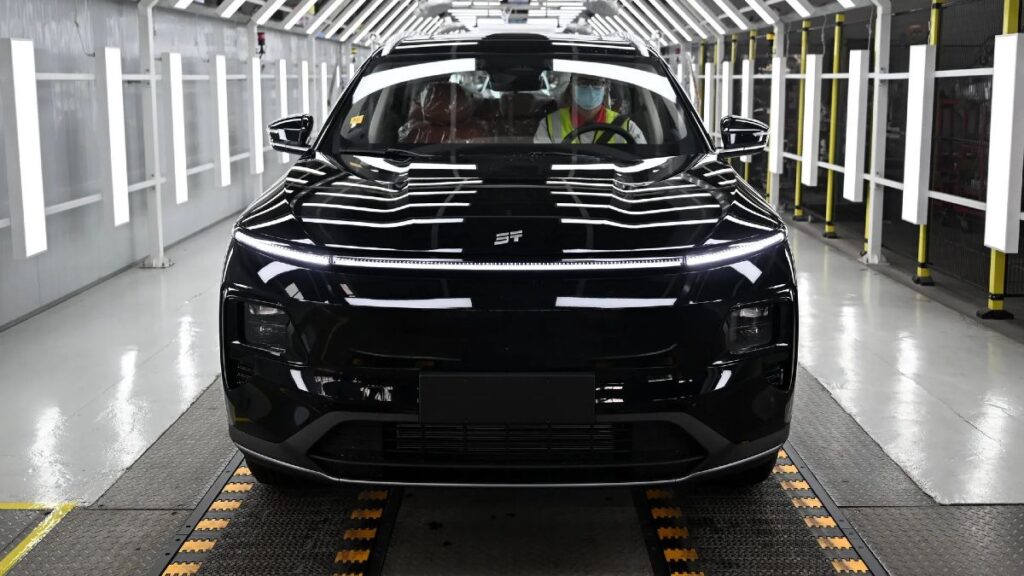
The electric car is here to stay, which is why in many countries like Spain they give aid and deductions for buying one, since it is the new reality with which we are forced to come to terms. In some countries it is even going so fast that they are evolving into disposable cars, as is happening in China, where more and more electric cars end up being scrapped practically new.
Technology is moving so fast in China that fixing a car is more expensive than buying a new car. This poses a serious problem for European car manufacturers as they focus on durability, while electric vehicles in China are often scrapped after just two or three years. A great contrast with the objective sought by European car factories. Experts observe a trend that is transforming cars into ephemeral consumer goods, similar to smartphones.
Technological innovation leaves cars themselves behind
The key to this phenomenon is the speed of technological advances. Nowadays, both batteries and software have very short life cycles, which causes vehicles to become outdated within a few years. “The evolution of batteries is going faster than the automobile industry itself,” explained Xing Zhou, from the consulting firm AlixPartners, to the specialized magazine Automobilwoche. In China, many young people consider that driving a car that is barely two years old is almost like driving an old vehicle, according to reports the German media T-online.
Repairing is no longer economically worthwhile
The intense price war in the Chinese market is accelerating this situation. Building a basic electric car can cost less than 20,000 euros, but replacing the battery after about three years can cost around 10,000 euros, making the repair uneconomical.
Given this scenario, many owners choose to buy a new car instead of repairing the old one. Furthermore, the limited presence of a second-hand market and the limited leasing options in China mean that discarded vehicles end up in large warehouses, converted into true car cemeteries that reflect a model focused on the constant sale of new units.
The Government lets the competition act
The Chinese authorities are indirectly favoring this dynamic. Within the current five-year plan, the Executive is reducing public subsidies to the sector. As electric cars are already cheaper than combustion cars, it is intended that the market itself will regulate the situation.
In response, manufacturers design their models with a clear price objective, prioritizing offering the necessary technology at the lowest possible cost. In this context, competitiveness is based on who manages to adjust prices the most.
A sector in full transformation
For many brands, this situation represents a real fight for survival. Experts predict that the pressure on prices will cause a consolidation of the market in the next two years, with the disappearance of numerous companies.
However, it is unlikely that this “disposable car” model will reach Europe. Current sustainability demands clash with the pace of Chinese production, as do the prices of new vehicles.