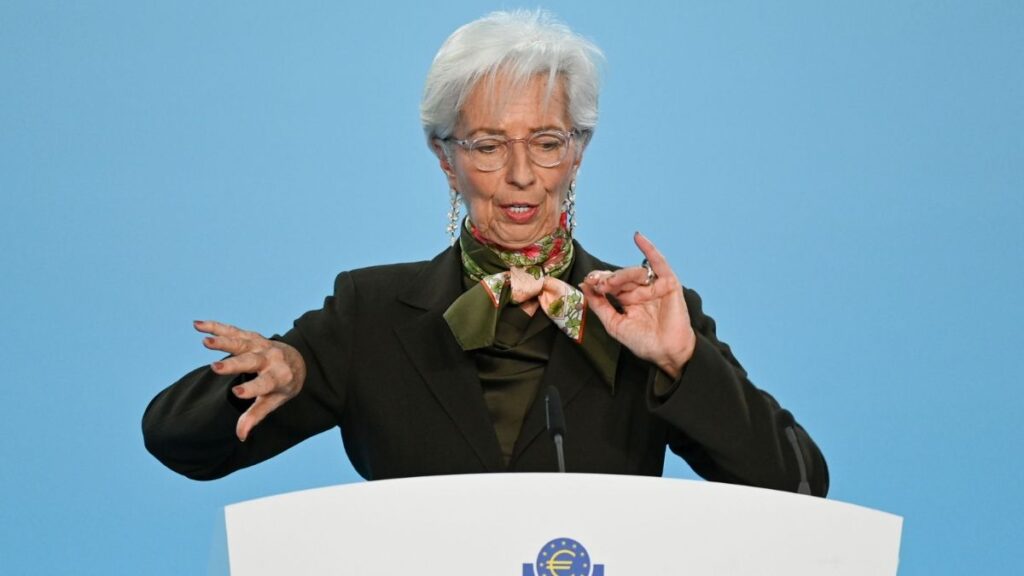
The European Central Bank (ECB) decided this Thursday to keep interest rates unchanged, despite the rise in inflation driven by the rise in energy prices following the escalation of the war in the Middle East. The deposit facility rate stands at 2%, while the main refinancing operations remain at 2.15% and the marginal lending facility at 2.40%.
The decision, anticipated by the markets, occurs in an environment of growing economic uncertainty. The institution recognizes that “the war in the Middle East has led to a sharp increase in energy prices,” which has driven inflation and deteriorated the economic climate. In April, the inflation rate has risen to 3%, moving away from the 2% target, while euro zone GDP growth has slowed to 0.1% in the first quarter.
The ECB thus draws a scenario in which upward risks for prices and downward risks for activity intensify. “The longer the war lasts and energy prices remain at high levels, the stronger the possible impact on general inflation and the economy,” the entity warns. This combination of inflationary pressures and economic weakness brings the eurozone closer to a context of stagflation, one of the most complex scenarios for monetary policy.
Lagarde considers that we start from a “solid” position
The ECB insists on its strategy of caution and dependence on data. The Governing Council will evaluate the evolution of inflation and growth at each meeting before deciding on possible adjustments, reiterating its willingness to use all its instruments to guarantee price stability in the medium term and preserve the correct transmission of monetary policy.
The ECB’s decision is aligned with that adopted by other major central banks. The Bank of England has maintained its reference rate at 3.75%, while the US Federal Reserve has chosen to maintain the target range between 3.50% and 3.75%. For its part, the Bank of Japan has left its rate unchanged at around 0.75%. This waiting period reflects general caution in the face of a global environment marked by geopolitical tensions and growing economic risks.