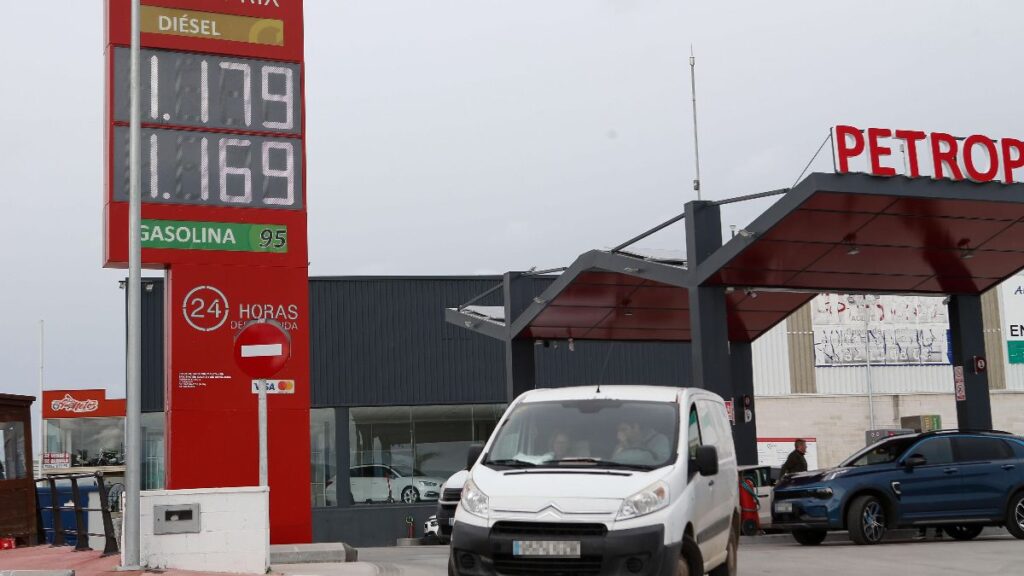
Refueling at a cheap gas station has always raised doubts among drivers. There are many who believe that ‘low cost’ fuels are of poorer quality, cause breakdowns or reduce vehicle performance. However, a report from the Organization of Consumers and Users (OCU) Dismantle this myth definitively. So looking for the cheapest gas stations to refuel will no longer be synonymous with shortening the life of vehicles.
After analyzing 80 samples of gasoline and diesel collected at service stations throughout Spain (including large chains, medium-sized, low-cost and supermarkets), the conclusion is clear: there are no important quality differences between fuels, regardless of the type of gas station.
There is no relationship between the type of gas station and the quality
The OCU report concludes that all the fuels analyzed comply with current European regulations, both in gasoline (EN 228) and diesel (EN 590).
One of the most important points of the study is that there is no relationship between fuel quality and the type of service station. That is to say, refueling at a large chain does not imply obtaining better fuel than at a low-cost gas station or supermarket.
In fact, the results show that in all groups there are fuels with very similar quality levels, without relevant differences between them.
The OCU tests
To verify the real quality of the fuels, the OCU carried out a laboratory analysis on seven key parameters, all of them regulated by European regulations:
- Sulfur: its combustion generates polluting emissions, which is why it is limited by law.
- Density: used to detect possible contamination.
- Vapor pressure: influences the safety and performance of the engine.
- Evaporation: helps identify impurities or inadequate mixtures.
- Boiling point: guarantees correct combustion.
- Water and particles: can cause breakdowns if they exceed certain limits.
- Appearance: should be clear and without visible residue.
The result is conclusive: all the samples analyzed meet the legal limits in all parameters.
In the case of diesel, other factors such as flash point or cold behavior were also analyzed, with no irregularities detected.
Are low-cost gas stations worse?
The OCU’s response is clear: no. The study shows that the fuels sold by low-cost gas stations are practically the same as those of the big brands.
This is explained because in Spain the fuel comes from a limited number of refineries and is distributed to all stations. The differences, when they exist, are mainly due to the additives that each brand incorporates, but they do not significantly affect the quality of the product.
Furthermore, the analysis confirms that there are no signs of fraud or non-compliant fuels at any of the stations analyzed.
The only factor that can make the difference
If there is one aspect that can influence the final quality of the fuel, it is not the type of gas station, but the state of its facilities.
According to the OCU, problems can appear in poorly maintained stations, where water or sediment can accumulate in the tanks. This could affect the fuel and, in specific cases, cause vehicle breakdowns.
Therefore, the recommendation is clear: choose well-maintained stations with high fuel turnover, something common in most current gas stations.
You can refuel without fear at any gas station
The OCU study dismantles one of the most widespread myths among drivers: the fuel at low-cost gas stations is not worse. They all comply with regulations, offer similar quality levels and do not pose a risk to the vehicle.
Thus, the choice of one gas station or another should not be based on prejudices about quality, but on other factors, knowing that the fuel that reaches the tank will be, essentially, the same.