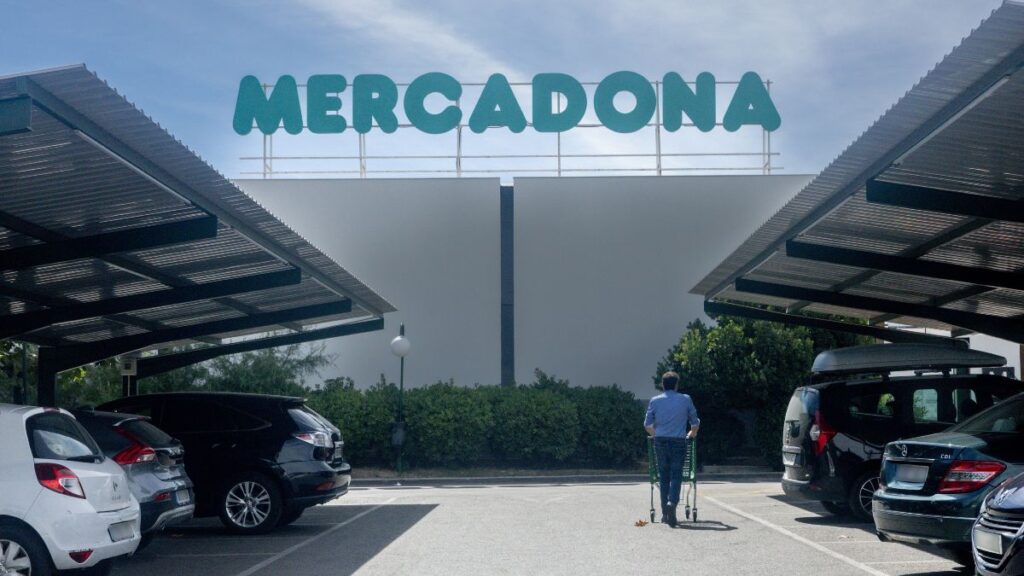
This is not the first time that Mercadona has introduced changes in its establishments; in fact, not long ago it changed its ‘Ready to Eat’ section. With the transformation that supermarkets and hypermarkets are experiencing in Spain, due to the fact that the establishments are increasingly smaller and many chains are considerably reducing their surfaces, Mercadona has no choice but to adapt.
That is why now, just after the arrival of its new ‘Tienda 9’ model to many cities, it has decided to also try to eliminate the fishmonger section in two towns in La Rioja. Now these stores sell the fish to their customers directly packaged on shelves and in refrigerators.
“We have been improving the way we sell fish for years, but there was one key question we needed to answer: Are you satisfied with the fish you buy?” With this hypothesis, they launched a period of listening and analysis among their clients, which has resulted in them doing away with the fishmonger’s section in two establishments in La Rioja and changing their sales model for this product.
Specifically, it has been in the Burgos Avenue supermarket, one of the four that the company chaired by Juan Roig has in Logroño, where they have directly removed the fishmonger’s section. While in Villamediana, which was the last supermarket that the chain opened in this community, it has united the classic fishmonger section with a new packaged fish area, which is where the new sales model seems to be heading.
Mercadona tests a new model for selling fish
“We are not eliminating the fishmonger as such, it is a laboratory test for a change in the format that is due to a decrease in fish consumption in Spain, because in the last ten years it has decreased by 30% in households,” official Mercadona sources explain to Diario LA RIOJA.
With this transformation, the fish is no longer sold whole on the counter and is now offered clean, cut and packaged in trays, located in cold rooms. According to the company, the objective is to offer “more quality, better service” and a format that better fits the way customers buy and consume this product, in addition to providing “more freshness.”
The implementation of this system will be progressive and, as the company assures, it will not mean loss of employment. In establishments where the traditional fishmonger disappears, the staff “will either be in charge of doing work in that section, be it cleaning, packaging…, or will move on to other tasks in the store.”
Reduce times and improve the shopping experience
The main objective? From Mercadona they summarize it like this: “The key is to reduce as much as possible the time that passes from when the fish comes out of the water until you consume it.”
For this reason, they have opted for the tray format, “guaranteeing quality and freshness.” This system allows us to offer “more finishes and endings (fillets, slices, whole fish…)” depending on the type of preparation, in addition to facilitating “less waiting in the store and a more agile purchase” and an assortment “adapted to real consumption.”
Questions about conservation and freezing
This new way of selling fish, which Mercadona defines as a kind of transformation of the model, already creates doubts among consumers. One of the main questions is whether canned fish can be frozen.
From the company they clarify: “They can last several days in the refrigerator and if they need to be frozen, they can with all products except for some exceptions that will be indicated on the label.”
As a recommendation, they advise “using special freezer bags sealed tightly” in case you open the tray. Furthermore, once frozen, “it is recommended to consume it within a month.”
Finally, they warn that thawed products that are refrozen “must be cooked completely, at more than 70 degrees for at least two minutes.”