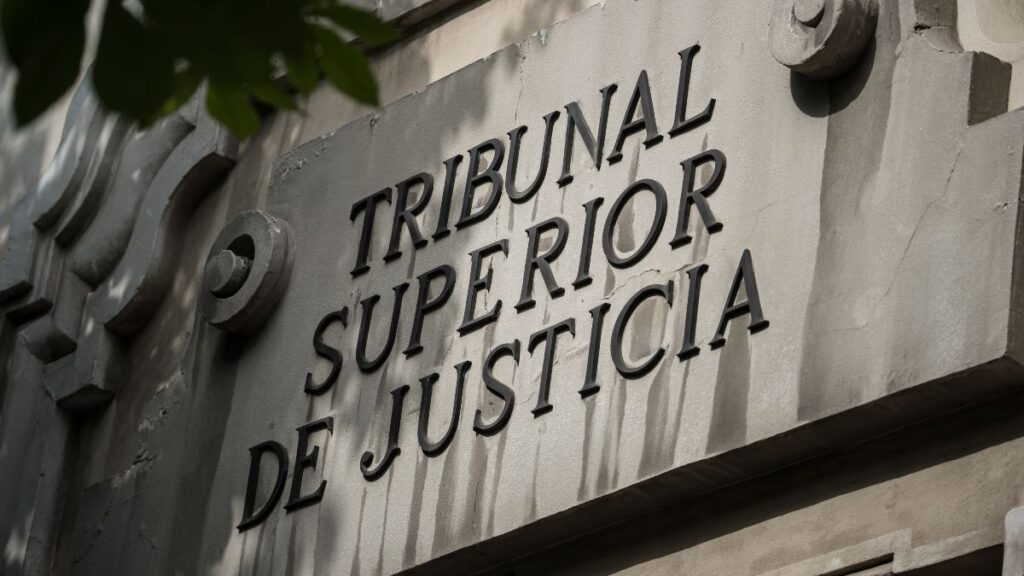
The benefit for family members is one of the least known Social Security aids. It is designed for children or siblings of pensioners who, when the beneficiary dies, are left without income because they were financially dependent on that pension. To access this, it is necessary to meet a series of requirements so strict that, even living with the deceased person all their life, the request may end up being denied. This is what has happened to a 48-year-old single man who requested this benefit after the death of his mother and who has seen how the Superior Court of Justice of Madrid has denied it.
According to the ruling STSJ M 3158/2026, which can be consulted in the Portal of the Judicial Powerit all begins on December 27, 2022, when the applicant’s mother dies. The man, single and with only 319 days of contributions in his entire working life, had lived with her and his father, also deceased, forever. After the death of his mother, he applied for Social Security benefit for family membersclaiming 72% of the regulatory base of the retirement pension that his mother had recognized, which amounted to 1,135.63 euros. In practice, he asked to charge about 817 euros per month. Social Security denied it in January 2024, considering that its economic dependence on the deceased had not been proven.
The applicant filed a previous claim, which was dismissed in April 2024, and went to court. The Social Court number 27 of Madrid dismissed his claim in April 2025, agreeing with the INSS. He was not satisfied and appealed to the TSJ of Madrid. The Social Chamber once again rejected their claims in March 2026. Without costs.
It is not enough to have lived with the deceased person all your life.
Article 226 of the General Law of Social Security recognizes the right to a pension to the children or siblings of beneficiaries of contributory retirement or permanent disability pensions who, upon the death of the deceased, meet all of these conditions: having lived with him and in his care, being over 45 years of age and single, divorced or widowed, proving prolonged dedication to his care and lacking his own means of support.
The Chamber detected that the applicant did not meet at least two of these requirements. The first, and the most determining, has to do with who was the true contributory pensioner of the family. “It is not proven that the actor’s mother was a contributory retirement pensioner in the terms required by the second section of article 226 of the LGSS, since it only appears that it was Don Bruno’s father who met such quality”notes the court. The person who had the contributory retirement pension from the General Regime, with an amount greater than double the minimum wage, was the father. Not the mother. And when the father died, the applicant did not request the benefit because, as he himself acknowledged, he had not yet reached the age of 45 required by the norm.
Now that the mother has died and he is already over that age, it turns out that she was not the contributory pensioner that the law requires as the deceased. A temporary trap with no way out.
The second problem is that it was not proven that he lacked his own means of living. The law not only requires not having income. It requires proving that there are no family members with a legal obligation to provide support according to article 145 of the Civil Code. “Nothing is declared proven in this regard as there is no proven data regarding the absence of family members with a legal obligation to provide support”concludes the sentence.
What is not proven in court is not settled in the appeal
The Court added an argument that definitively closed the door. Even if an attempt was made to access the benefit through the general means of article 226.1 of the LGSS, it was not proven in the trial that the applicant was not entitled to any other Social Security pension. And in the appeal no new facts can be introduced. “It is not possible to assume the issue, that is, to start from facts other than those declared proven by the lower court ruling”recalls the court, citing consolidated jurisprudence of the Supreme Court.
This case leaves a concrete lesson for anyone who lives with a pensioner father or mother and depends on that pension. If the parent with a contributory pension dies, the request for the benefit for family members must be made at that time, not when the other dies. And in the trial each requirement must be proven with specific documentary evidence, from economic dependence to the non-existence of family members obliged to provide support. What is not tested in the first instance cannot be fixed later.