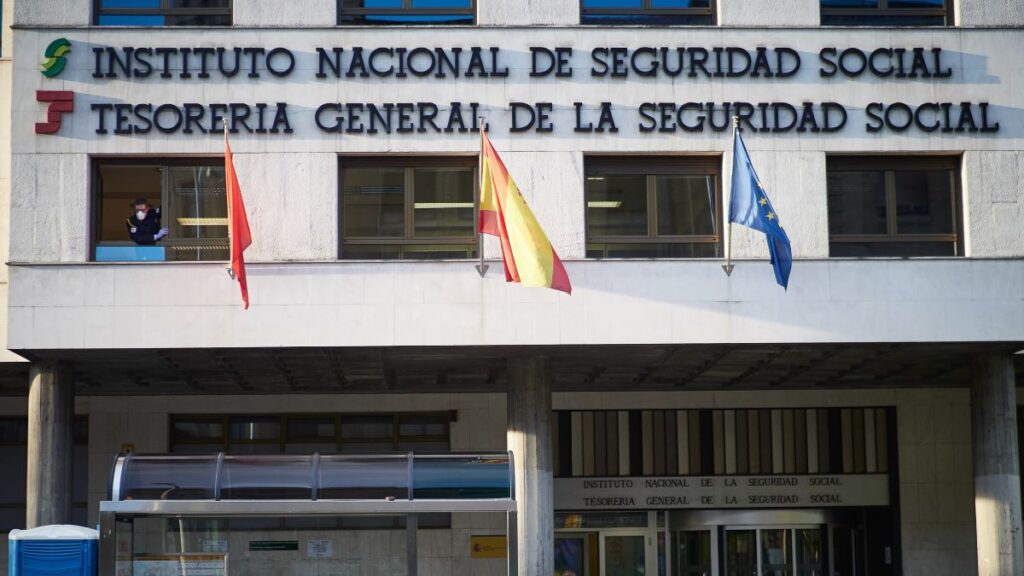
The Supreme Court has ruled in favor of a Galician worker to whom the National Social Security Institute stopped paying her absolute permanent disability pension just one year after starting to collect it, despite the fact that a court had recognized that degree. The Social Chamber condemns the INSS to pay the benefit from January 28, 2019 onwards, with its revaluations.
According to the ruling STS 1350/2026, which can be consulted in the Portal of the Judicial Powerit all begins with a total permanent disability already recognized by this woman. She requested that Social Security review her degree due to aggravation, and this response was negative. That is to say, he asked to go from a total degree, which charges 55% of the regulatory base and allows working in other jobs, to an absolute one, for which 100% is received, but disqualifies him from almost any profession.
Faced with this situation, he went to the Social Court number 1 of Pontevedra, where they agreed with him, granting him the status of absolute permanent disability, and despite the fact that the Social Security appealed, the Superior Court of Galicia once again confirmed the recognition.
Now, while this judicial process was taking its course, Social Security on its own initiative opened an ex officio review for improvement, for which the total grade should continue to be maintained. In other words, that Social Security paid the absolute only from January 28, 2019 to February 23, 2020, and from then on it restored the beneficiary to total permanent disability, nullifying what a court had just recognized.
The worker asked to execute the sentence that had recognized her absolute disability. The court, at the request of Social Security, archived the execution. The TSJ of Galicia revoked that file in May 2024 and ordered payment. Social Security took the matter to the Supreme Court.
A final sentence is not deactivated through the back door
The Public Prosecutor’s Office explains in its report that “The execution of a final resolution cannot be suspended due to the existence of another resolution that is not yet final, even if the latter may modify the first”. The Chamber endorses this idea and rejects the Social Security appeal, appreciating that the ruling that it provided as contradictory resolved a very different case.
The conflict is that the ex officio review for improvement was opened after the ruling recognizing the absolute was already final. Here the opposite happened. “The ex officio review process is activated by the INSS not only before the appeal was resolved confirming the IPA, but even before the lower court ruling was issued recognizing the absolute IP”points out the speaker. This chronological nuance changes everything, since the TSJ of Galicia explained that there are not two pensions, one for absolute disability and another for total disability, but rather a single absolute pension, which is the one that Social Security must comply with.
The Supreme Court explains that the legal regime for review for improvement is not identical to that of an initial declaration of incapacity. When there is an aggravation sentence in progress and Social Security simultaneously opens a review for improvement, it is not exercising a neutral power: it is trying to deactivate a judicial ruling that is still in progress. The Chamber recalls that article 202 of the General Law of Social Security and Royal Decree 1300/1995 allow the grade to be reviewed, yes, but not to use that route as a shortcut to avoid a sentence.
For everything, Social Security will have to pay for absolute permanent disability from January 2019 onwards, with the appropriate revaluations and improvements, and not just the short year that it paid. The sentence is final and there are no costs.