
Taking your bicycle up the elevator seems like a simple gesture, but the reality is that it can generate conflicts in neighboring communities. And, although all owners have the right to use the common elements of the building, the Horizontal Property Law establishes that this use must be appropriate and respectful of the rest of the neighbors, and the community can even prohibit riding a bike on them.
He elevator It is considered a common element and, as such, its use is subject to the rules of coexistence and the agreements adopted by the community of owners. The law does not expressly mention bicycles, but it does set limits when the use of common facilities may cause damage, inconvenience or make access difficult for other users.
These problems usually arise when bicycles occupy a large part of the elevator, cause knocks on walls and doors, generate dirt or prevent normal use by older people, minors or neighbors with reduced mobility.
The community can limit the use of the elevator with bicycles
Article 9.1.a) of the Horizontal Property Law obliges all owners to respect the general facilities of the building and use them appropriately, avoiding causing damage or damage.
When the use of the elevator to transport bicycles causes deterioration, abusive use or repeated inconvenience, the community can intervene to protect the good condition of the common element and guarantee its correct functioning.
Furthermore, article 6 of the Horizontal Property Law allows the community to approve internal regulations to regulate the details of coexistence and the proper use of common services and elements.

These rules may include limitations on the use of the elevator, such as prohibiting the use of bicycles or establishing certain conditions for doing so, as long as the measure is reasonable and generally applied.
The internal regulations do not require unanimity or qualified majorities. According to article 17.7 of the Horizontal Property Law, these types of agreements are approved by a simple majority.
This is also confirmed by the College of Property Administrators of Madrid through a video published through their social networks in which they explain that the community of owners is the owner of the common elements and can regulate what can or cannot be done in them.
This means that the favorable vote of the majority of the owners attending the Meeting is sufficient, who, in turn, represent the majority of the participation fees of those present. Once approved, these rules are binding on all owners, including those who did not vote in favor or who did not attend the meeting.
The ban cannot be imposed arbitrarily
The Horizontal Property Law does not allow the president, the administrator or a neighbor to impose a ban on their own through signs or unilateral decisions. For the limitation to be valid, there must be an agreement of the Board and a correctly approved internal regime rule.
Likewise, article 7.2 of the Horizontal Property Law prohibits the development of activities that are annoying, dangerous or harmful to the property or other neighbors.
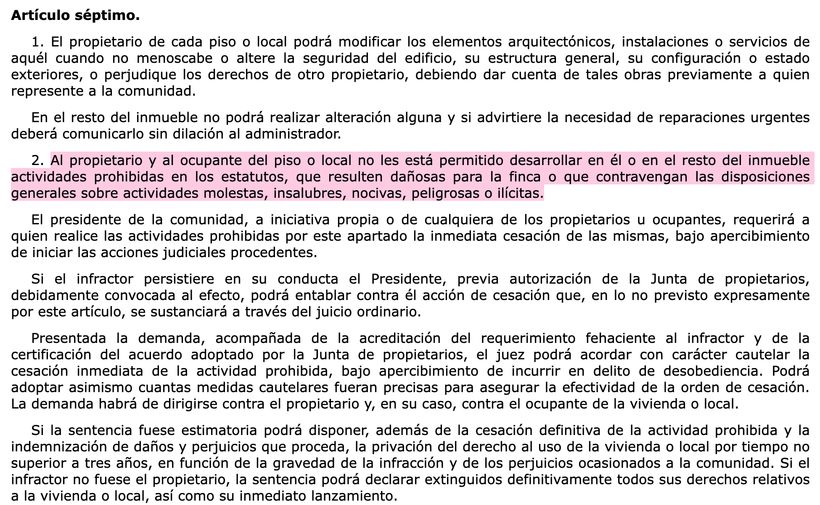
If the use of the elevator with bicycles generates repeated inconvenience, safety risks or makes normal access difficult for other owners, the community may demand that this practice cease. However, an absolute ban could be challenged if it is disproportionate or causes unjustified harm.
The community must assess the specific circumstances of the building, such as the size of the elevator, the existence of alternatives or the presence of neighbors with special needs. In case of disagreement, the affected owner can challenge the agreement if he considers that it violates the law or represents an abuse of rights.