In Spain, where the average expenditure on food for a family is around 6,400 euros annually, the increase in the price of basic products derived from the conflict in the Middle East is putting the economies of many households to the test. The rise in foods such as eggs, which have become more expensive by more than 20% in the last year, or electricity during peak hours, is putting even more strain on family budgets. Pilar García de la Granja already warned that everything “is going to cost us much more.”
And if for a family with 1 or 2 children (which is the most common) the effect is already noticeable, in a large family with more than 10 members the effect is multiplied. More food, more clothing, more school expenses and more unforeseen events make any price increase more noticeable.
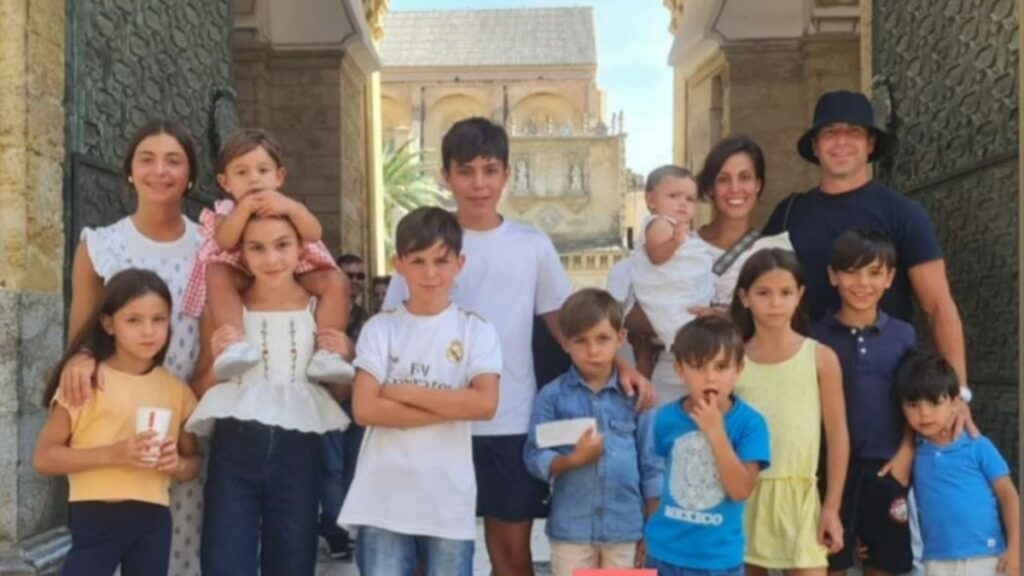
This is the case of Raquel and Francisco, parents of 12 children and with another on the way. The family has shared their experience in the ‘Espejo Público’ program, where they have explained how they face the increased cost of living without changing their way of living.
“We’re not really taking into account many things because in a family with 12 children there are always unforeseen events,” explains Francisco, who recognizes that the rise in prices is “one more” of the expenses that arise on a daily basis.
An annual expense of 40,000 euros for the whole family
Although they do not keep exhaustive control of each purchase, they do have a clear idea of what it means to maintain their home. “At the family level, without getting too excited, it will be about 40,000 euros a year,” says Francisco.
A figure that contrasts with the national average and reflects the impact that household size has on total spending. In food alone, the cost can skyrocket, especially in a context in which basic products such as eggs, vegetables or electricity continue to rise.
Even so, the family assures that they have not changed their consumption habits. “We have not changed anything. We have a family business that allows us to live,” explains Francisco, who also points out that this situation is not new: “It is a trend that has been coming since after the pandemic.”
Of course, they recognize that supermarket spending “has doubled in five years”, which forces them to adjust at certain times.
Cut when necessary, but without major changes
The key to your family economy is flexibility. “When things are fairer, we cut back, and when things are good, we give thanks,” Francisco summarizes.
These adjustments do not imply major sacrifices, but rather small day-to-day decisions. Raquel gives concrete examples: less clothing purchases or limiting certain social expenses for the children.
“They themselves see the reality. Sometimes they don’t dare to say that they want to go to every birthday party or things like that,” he explains. In a house with so many members, every decision counts.
They also resort to common practices in many large families, such as taking advantage of clothes between siblings or adjusting purchases to what is really necessary.
A way of life where money is not everything
Beyond the numbers, Raquel and Francisco highlight their way of facing life. They assure that they have never considered giving up having children for financial reasons and that, despite the difficulties, they do not feel that they lack what is essential.
“Since we got married we have never lacked anything,” says Raquel, who links that stability to her way of understanding life and her faith.
In a context of widespread price increases, your case reflects a reality shared by many large families: the need to constantly adapt, adjust spending and rely on organization to maintain the economic balance of the home.