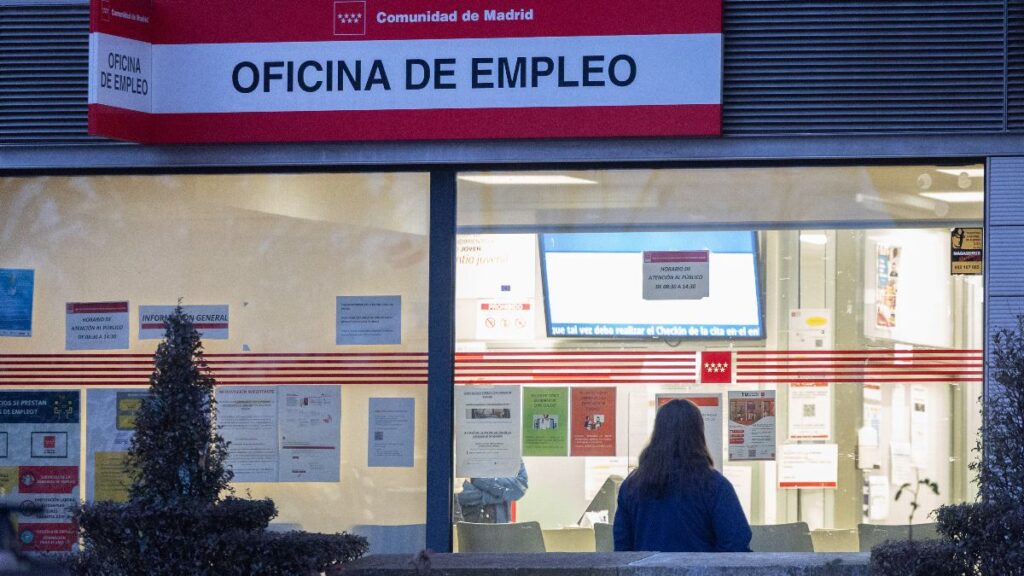
The Supreme Court rejects the appeal of the State Public Employment Service (SEPE) in which it requested that a man return 18,931.02 euros for having collected the subsidy for those over 52 years of age while receiving total permanent disability. The High Court establishes that the contributions used to generate permanent disability can be counted to access this subsidy for those over 52 years of age.
The ruling of the Supreme Court (available at this link of the Judiciary) explains that this beneficiary requested the subsidy for those over 52 years of age from the SEPE when he already had a recognized permanent disability, and this was approved. To do this, the National Social Security Institute certified that it met the required contribution requirements, both the generic deficiency (the minimum of 15 years) and the specific one (at least two years within the last fifteen years).
Although it was approved for meeting the requirements, two years later, in May 2022, Social Security issued a new report in which it indicated the opposite, that is, that the worker did not reach the required 15 years of contributions, considering that the periods that had already served to recognize permanent disability should be excluded. In addition, they asked him to return the 18,931.02 euros upon determining that it was an improper charge.
That is, this does not refer to the compatibility between both benefits, something that the courts have already made clear is possible and that, in fact, Miriam Ruiz herself clarified. In this case, it talks about whether the contributions that gave access to permanent disability can be used to access the subsidy for those over 52 years of age.
As a result of this change in criteria, the SEPE went to court to annul the subsidy and demand the return of the amounts received. In this sense, both the Social Court and the Superior Court of Justice of the Basque Country rejected it, understanding that the beneficiary acted in good faith and that the administrative error could not be attributed to him.
The Supreme Court rules out that there was an error
In the Supreme Court, the SEPE defended that the subsidy had been granted improperly and that it was appropriate to demand its return. The High Court explains that “nothing prevents the contributions that gave rise to the declaration of total permanent disability from being taken into account to cause entitlement to the subsidy”, making it clear that both benefits respond to different purposes and are not incompatible in this context.
In fact, the court explains that the contribution requirement to access the subsidy has an instrumental nature, since it is linked to future access to the retirement pension. For this reason, he adds that “the beneficiary is not obliged to choose between a subsidy and a pension” due to the fact that he has previously used these contributions.
For all that has been explained, the Supreme Court ends by saying that the SEPE’s claim lacks basis and even goes so far as to expressly state that, in a case like this, “there was not even any error in the initial recognition of the subsidy.” However, the High Court agrees with the worker and will not have the obligation to return to SEPE the 18,931.02 euros that he had received with the subsidy for those over 52 years of age.